About Manual Double Flange Butterfly Valve
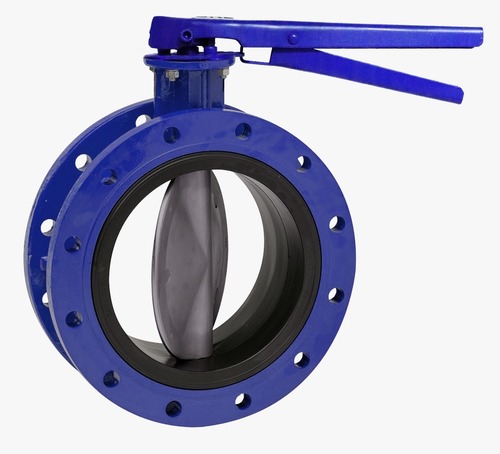
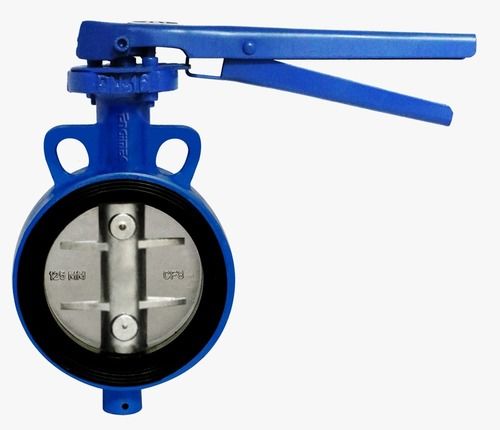
Manual Twofold Rib Butterfly Valve is a modern class plumbing fitting that is ordinarily utilized in low to high compel stream framework to control stream rate inside the pipelines. It is fixed with a spring stacked mechanical switch to open or close stream channel without any problem. The flanged body of this device makes it more straightforward to introduce it with the assistance of mechanical latches unbendingly. The offered valve is furnished with an excited coat that makes it reasonable destructive as well as non-destructive stream frameworks. Purchase from us this modern grade valve at a sensible cost range.
Manual Twofold Rib Butterfly Valve Determinations:
1. Power: Manual
2. Material: CI, CS, SS304, SS316
3. End Association: Flanged
4. Administrator: Switch, Stuff
5. Size: 1"- - 48" Inch
FAQ:
Q1: What is a Manual Twofold Rib Butterfly Valve?
Ans: A Manual Twofold Rib Butterfly Valve is a kind of modern valve used to direct or control the progression of fluids (like water, oil, gas, and so forth) through a pipeline. It has a roundabout circle or plate (the "butterfly") mounted on a pole in the middle. The valve can be opened, shut, or to some extent opened by pivoting the plate inside the line.
Q2: How does a Manual Twofold Rib Butterfly Valve work?
Ans: The valve's circle is situated opposite to the course of stream when shut and resemble when completely open. Turning the valve handle or handwheel pivots the plate to control the stream rate. This plan offers fast, quarter-turn activity for effective stream control.
Q3: Where are Manual Twofold Rib Butterfly Valves utilized?
Ans: These valves are generally utilized in different enterprises including water treatment, central air frameworks, substance handling, oil and gas, power age, from there, the sky is the limit. They are appropriate for applications where tight shut-off isn't basic, and fast, productive stream control is wanted.
Q4: What are the upsides of utilizing Manual Twofold Spine Butterfly Valves?
Ans: A few benefits include:
- Fast quarter-turn activity.
- Smaller plan and lightweight development.
- Low-pressure drop across the valve.
- Savvy contrasted with other valve types.
- Reasonable for enormous width pipelines.
- Simple support and establishment.
Q5: Are there any restrictions to utilizing these valves?
Ans: Indeed, a couple of restrictions are:
- Not appropriate for applications requiring exact choking or tight shut-off.
- The plate can amass flotsam and jetsam over the long run, influencing execution.
- Fixing materials might break down quicker in grating or destructive conditions.
Q6: How would I pick the right size for my application?
Ans: The valve size ought to match the line distance across it will be introduced in. Talking with valve producers or designers can assist you with choosing the proper size in view of your stream necessities and framework determinations.
Q7: What materials are these valves normally produced using?
Ans: Butterfly valves can be produced using materials like cast iron, pliable iron, treated steel, carbon steel, and, surprisingly, intriguing amalgams for explicit applications.
Q8: Could Manual Twofold Spine at any point Butterfly Valves be mechanized?
Ans: Indeed, these valves can be outfitted with actuators for programmed activity. Actuators can be pneumatic, electric, or water powered, permitting controller and coordination into computerized frameworks.
Q9: How would I introduce and keep up with these valves?
Ans: Legitimate establishment includes adjusting the valve to the pipeline, guaranteeing the spines match and are appropriately fixed. Support incorporates customary investigations, oil of moving parts, and tending to any holes or erosion.
Q10: Where could I at any point purchase Manual Twofold Spine Butterfly Valves?
Ans: You can buy these valves from modern providers, valve makers, merchants, and online commercial centers that have practical experience in modern gear.
Superior Performance and FlexibilityEngineered for reliability, the Manual Double Flange Butterfly Valve provides zero leakage and bi-directional tightness. It operates efficiently with low torque, thanks to its anti-blowout stem and precision disc design. This valve suits a wide range of environments and application types, including water, air, oil, and compatible fluids, maintaining top performance under varied pressure and temperature conditions.
Versatile Application and Easy InstallationConforming to ISO and international end connection standards, the valve can be installed horizontally or vertically in pipelines, ensuring adaptability for distributors, exporters, manufacturers, and suppliers across sectors. Its double flange connection allows for secure and quick mounting, while the mounting flange complies with ISO 5211 for actuator compatibility.
Corrosion Resistance and DurabilityWith an epoxy powder coating of at least 250m, the valve offers excellent protection against corrosion and harsh environments. Suitable for both indoor and outdoor setups, it promises lasting durability. All components, from the cast iron body to the stainless steel or carbon steel pins, are designed for long-term use and minimal maintenance.
FAQ's of Manual Double Flange Butterfly Valve:
Q: How does the manual double flange butterfly valve operate?
A: The valve uses a quarter-turn (90 rotation) mechanism via a hand lever or gear box, providing fast and precise control for opening or closing. Operation is simple and does not require additional power sources.
Q: What types of fluids and environments can this valve handle?
A: It is suitable for water, air, gas, oil, and other compatible fluids, and designed for indoor or outdoor use in applications such as water supply, wastewater, HVAC, irrigation, and industrial pipelines.
Q: When is it beneficial to choose EPDM, NBR, or PTFE seat material?
A: Choose EPDM for water and general applications, NBR for oil and gases, and PTFE for aggressive chemicals or higher temperature environments. Selection depends on your specific media and operational requirements.
Q: Where can this valve be installed within a pipeline system?
A: Thanks to its double flange connection and versatile mounting position, the valve can be installed horizontally or vertically in a wide range of locations, accommodating different pipeline layouts and requirements.
Q: What standards does the valve comply with for installation and connection?
A: It meets ISO 5752 Series 13/14 for face-to-face length, ISO 5211 for top flange mounting, and offers end connection compatibility with EN1092, ANSI, and JIS standards for global adaptability.
Q: How does the valve ensure zero leakage and safe operation?
A: Featuring bi-directional bubble-tight sealing and an anti-blowout stem design, the valve ensures no leakage and safe operation even under high pressure conditions, making it dependable for critical pipeline networks.





 Send Inquiry


 Send Inquiry
 Send Inquiry
 Send SMS
 Call Me Free