About Knife Edge Gate Valve
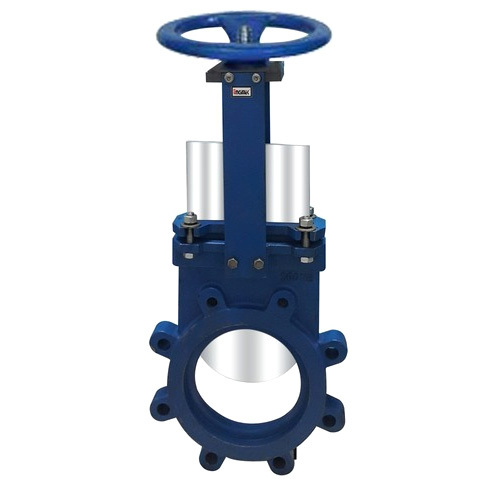
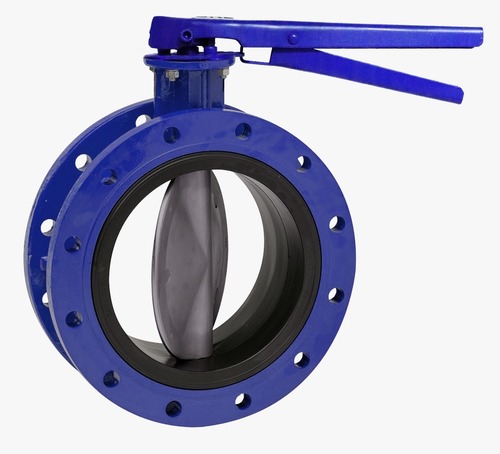
Blade Edge Door Valve is an inline type plumbing fitting that can be utilized modern stream frameworks to control the pace of liquid moving through the pipelines. It is made by utilizing top-grade alloyed steel and cast iron that give high sturdiness and solidarity to oppose outrageous working circumstances. It comes in different adjustable sizes according to the request set by our clients. This item has flanged plan to introduce it with the assistance of mechanical latches.
Knife Edge Gate Valve Specifications:
1. Frequency: 50 Hz
2. Surface Treatment: Paint Coated
3. Color: Blue
4. Body Material: Cast iron
FAQ:
1. What is a blade edge entryway valve?
Ans: A blade edge door valve is a sort of modern valve intended for applications where a tight turned down and segregation of the liquid stream is required. It has a sharp-edged door that slices through the streaming medium to accomplish a total conclusion.
2. Where are blade edge entryway valves utilized?
Ans: Blade edge entryway valves are generally utilized in enterprises like mash and paper, wastewater treatment, mining, power age, compound handling, and that's only the tip of the iceberg. They are appropriate for taking care of liquids with suspended solids, slurries, thick media, and destructive materials.
3. How does a blade edge door valve work?
Ans: A blade edge door valve works by moving a level entryway with a honed edge opposite to the heading of the stream. At the point when the valve is opened, the door is pulled up, permitting liquid to stream. At the point when shut, the door is brought down, slicing through the stream to give a tight seal.
4. What are the benefits of utilizing blade edge door valves?
Ans: A few benefits include:
- Tight shut-off: The blade edge configuration guarantees insignificant spillage when the valve is shut.
- Appropriate for solids: They can deal with liquids with suspended solids, slurries, and thick materials.
- Low strain drop: The smoothed out entryway configuration decreases pressure drop across the valve.
- Consumption obstruction: They can be built from erosion safe materials for requesting applications.
5. What are the impediments of blade edge entryway valves?
Ans: A couple of impediments are:
- Not so much for high strain: They probably won't be appropriate for incredibly high-pressure applications.
- Restricted choking: Blade edge door valves are better for on/off applications as opposed to exact choking.
- Chance of door harm: Particles in the liquid can cause entryway wear after some time.
6. Are blade edge entryway valves unidirectional or bidirectional?
Ans: Blade edge entryway valves can be intended to be either unidirectional (stream in one course) or bidirectional (stream in the two headings), contingent upon the application and plan.
7. How would you keep a blade edge door valve?
Ans: Customary support incorporates examining the door and seat for wear, checking for spills, and guaranteeing the actuator or handwheel is working appropriately. Flushing the valve and greasing up parts may likewise be fundamental.
8. Will cut edge door valves deal with grating media?
Ans: Indeed, blade edge door valves are reasonable for taking care of grating media, as the plan permits the entryway to slice through solids and keep a tight seal.
9. What sizes are accessible for blade edge door valves?
Ans: Blade edge entryway valves come in different sizes, going from a couple creeps to bigger sizes, contingent upon the maker and the particular application prerequisites.
10. Will cut edge entryway valves be robotized?
Ans: Indeed, blade edge door valves can be outfitted with different kinds of actuators, for example, pneumatic, pressure driven, or electric, to empower remote and computerized activity.
Optimized Flow Control for Industrial MediaKnife Edge Gate Valves are ideal for controlling fluids with suspended solids, viscous materials, and slurries. Their full port design allows minimal pressure drop, while the knife-edged disc ensures minimal jamming, bubble-tight shutoff, and efficient handling of aggressive or clog-prone media.
Versatile Construction and CustomizationAvailable in cast iron, ductile iron, stainless steel, carbon steel, and alloy steel, the valve may be tailored with EPDM, PTFE, nitrile, or metal seats, along with gland packing in PTFE, graphite, or equivalent. It can be supplied as bonnetless, with rising or non-rising stem, and in unidirectional or bidirectional styles.
Comprehensive Actuation and Control OptionsHandle operation manually by handwheel or gear, or integrate with pneumatic, electric, or hydraulic actuators at various voltages per plant requirements. The ISO 5211 top flange simplifies actuator mounting, while clear open/close indicators ensure reliable position monitoring.
FAQ's of Knife Edge Gate Valve:
Q: How does a knife edge gate valve function in slurry and viscous fluid applications?
A: Knife edge gate valves are designed with a sharpened disc that slices cleanly through slurries, pulpy media, or fluids with suspended solids. This prevents clogging and provides a bubble-tight shutoff, making them suitable for challenging industrial environments, especially where jamming is a concern.
Q: What materials and coatings are used for corrosion resistance in these valves?
A: Bodies can be manufactured from cast iron, ductile iron, stainless steel, carbon steel, or alloy steel, all of which may be epoxy powder coated or painted to enhance corrosion resistance. Seat rings are available in EPDM, PTFE, nitrile, or metal to suit various chemical and temperature exposures.
Q: Where can these knife edge gate valves be installed and what industries benefit most?
A: These valves are suitable for use in pulp and paper, chemical, mining, sugar, food and beverage, water treatment, and power generation industries. Their robust construction and versatility allow installation in pipelines carrying slurries, pulpy liquids, or viscous media in industrial plants.
Q: What are the benefits of a bonnetless design and rising vs. non-rising stem options?
A: A bonnetless design reduces maintenance and potential leak points, ideal for high-solid media. Rising stems allow for easy visual position verification, while non-rising stems are better suited for space-constrained environments.
Q: How is actuator compatibility ensured for automation?
A: The top flange follows ISO 5211 standards for easy mounting of pneumatic, electric, or hydraulic actuators. Electrical actuators operate on 110V, 220V, or 415V AC, allowing flexible integration within automated control systems.
Q: What standardization and quality assurance practices are followed?
A: Valves are manufactured to MSS SP-81 for face-to-face dimensions and can comply with ASME B16.5, EN 1092, or IS standards for end connections. They undergo rigorous testing per API 598, IS 14846, and EN12266, ensuring leakage meets Class VI (bubble-tight shutoff).
Q: When should I choose a metal-seated versus a resilient-seated valve?
A: Metal-seated valves provide superior durability at high temperatures (up to 250C) and are recommended for abrasive media. Resilient seats (EPDM, PTFE, nitrile) offer better sealing in lower temperature or mildly abrasive service.





 Send Inquiry


 Send Inquiry
 Send Inquiry
 Send SMS
 Call Me Free