About Manual Knife Edge Gate Valve
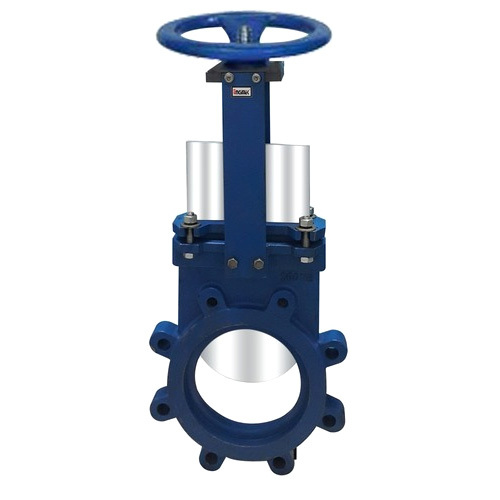
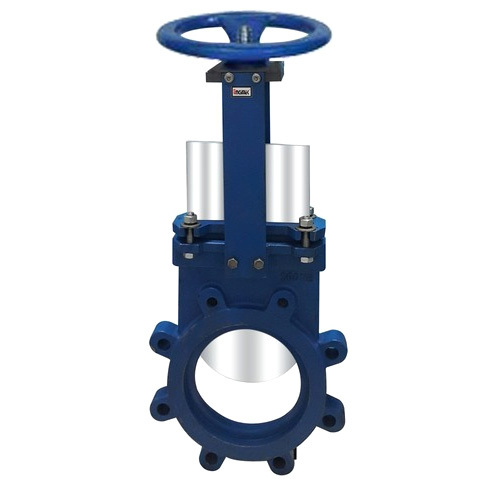
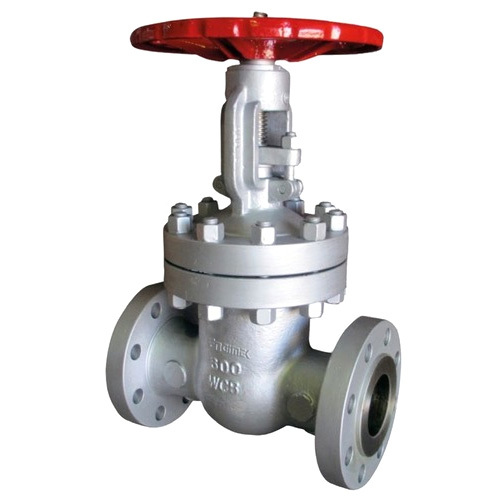
This Manual Knife Edge Gate Valve, which was meticulously made, combines outstanding performance with simple usage. The Knife Edge Gate Valve, which is intended to control the flow of liquids and semi-solid solids, has a sharp-edged gate that easily cuts through the medium, assuring minimum resistance and a smaller pressure drop. You have complete control over the flow rate thanks to its manual operation.
Applications:
- A robust and long-lasting design distinguishes the Manual Knife Edge Gate Valve, assuring dependable performance even in demanding industrial applications.
- This valve's ability to precisely control flow enables for exact modification of the flow rates of materials or fluids, increasing operational effectiveness.
- The valve offers a tight and secure shut-off, limiting leakage and preventing material accumulation, thanks to its distinctive knife-edge gate.
- The valve's simple manual operating mechanism enables operators to quickly open or close the gate as needed and promotes seamless control.
- This valve delivers remarkable longevity by withstanding hostile conditions and corrosive chemicals since it is made of corrosion-resistant materials.
Reliable Flow Control for Demanding ApplicationsThe Manual Knife Edge Gate Valve stands out in sectors like wastewater treatment, chemical processing, mining, and more. Its rugged construction supports consistent performance despite challenging conditions. With sizes ranging from DN50 to DN600, and various end connections conforming to leading standards, it offers extensive compatibility for industrial systems.
Engineered for Durability and Leak-Free OperationEquipped with epoxy coating for superior corrosion resistance and high-quality gland packing, these valves ensure zero leakage. The optional PTFE, graphite, or metal seats, along with robust stem and disc materials, further extend service life and enable the valve to withstand temperatures from -20C to 180C and pressures up to 16 bar.
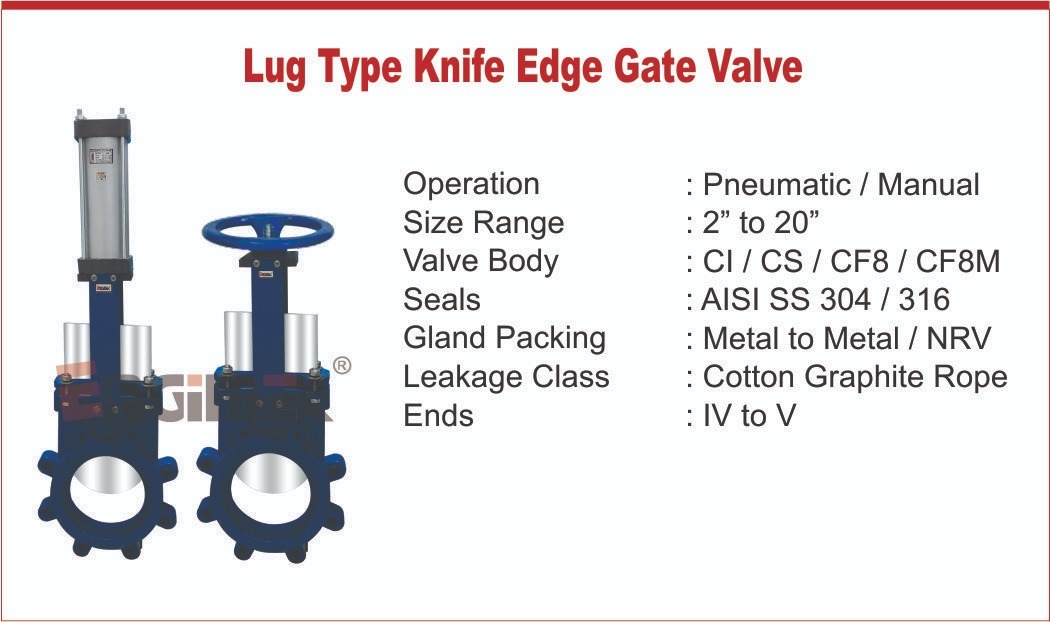
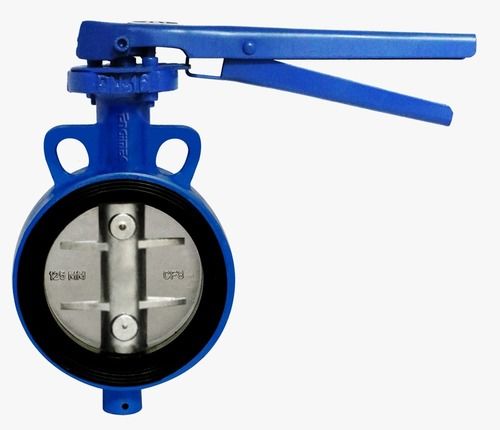
Flexible Design and Easy MaintenanceChoose between rising or non-rising stem models, flanged, wafer, lug, or butt weld end connections, and a selection of seats based on your requirements. The compact build and straightforward manual operation simplify installation and routine maintenance. Future upgrades, such as pneumatic or electric actuators, can be easily implemented.
FAQ's of Manual Knife Edge Gate Valve:
Q: How does the operation of the Manual Knife Edge Gate Valve work?
A: This valve is operated manually using either a handwheel or lever. Depending on the selected model, operation is either quarter-turn or linear, which moves the gate up or down to control flow through the pipeline.
Q: What makes the valve suitable for corrosive or harsh environments?
A: The body is epoxy coated for enhanced corrosion resistance, and high-quality gland packing and seat material options like PTFE or graphite help ensure longevity even under aggressive conditions.
Q: When should I choose a rising stem over a non-rising stem design?
A: A rising stem model is suitable when it is important to visually verify valve position, while non-rising stems are ideal for installations with vertical space constraints or where external stem exposure needs to be minimized.
Q: Where can Manual Knife Edge Gate Valves be applied effectively?
A: These valves are widely used in wastewater treatment, chemical processing, pulp and paper manufacturing, mining, food and beverage processing, and bulk handling systems involving slurries or semi-solids.
Q: What is the process for selecting the right gasket and seat material?
A: Gasket and seat material selection depends on the flowing medium and temperature requirements. PTFE is suitable for most chemicals and higher temperatures, graphite is used for higher temperature applications, while rubber and metal options are chosen based on the type of media and pressure involved.
Q: How can the valve be adapted for automated control in the future?
A: The valve is designed to be convertible to pneumatic or electric actuator operation, enabling seamless integration with automated control systems without replacing the main valve body.
Q: What are the benefits of choosing this valve for my facility?
A: Key benefits include rugged construction for reliability, zero leakage due to quality packing, easy maintenance, compatibility with multiple standards (ASME, DIN, BS, IS), and the ability to handle a wide range of media under harsh conditions.





 Send Inquiry


 Send Inquiry
 Send Inquiry
 Send SMS
 Call Me Free